
MolaQuest journal · Thailand
One month living and diving on Koh Lanta
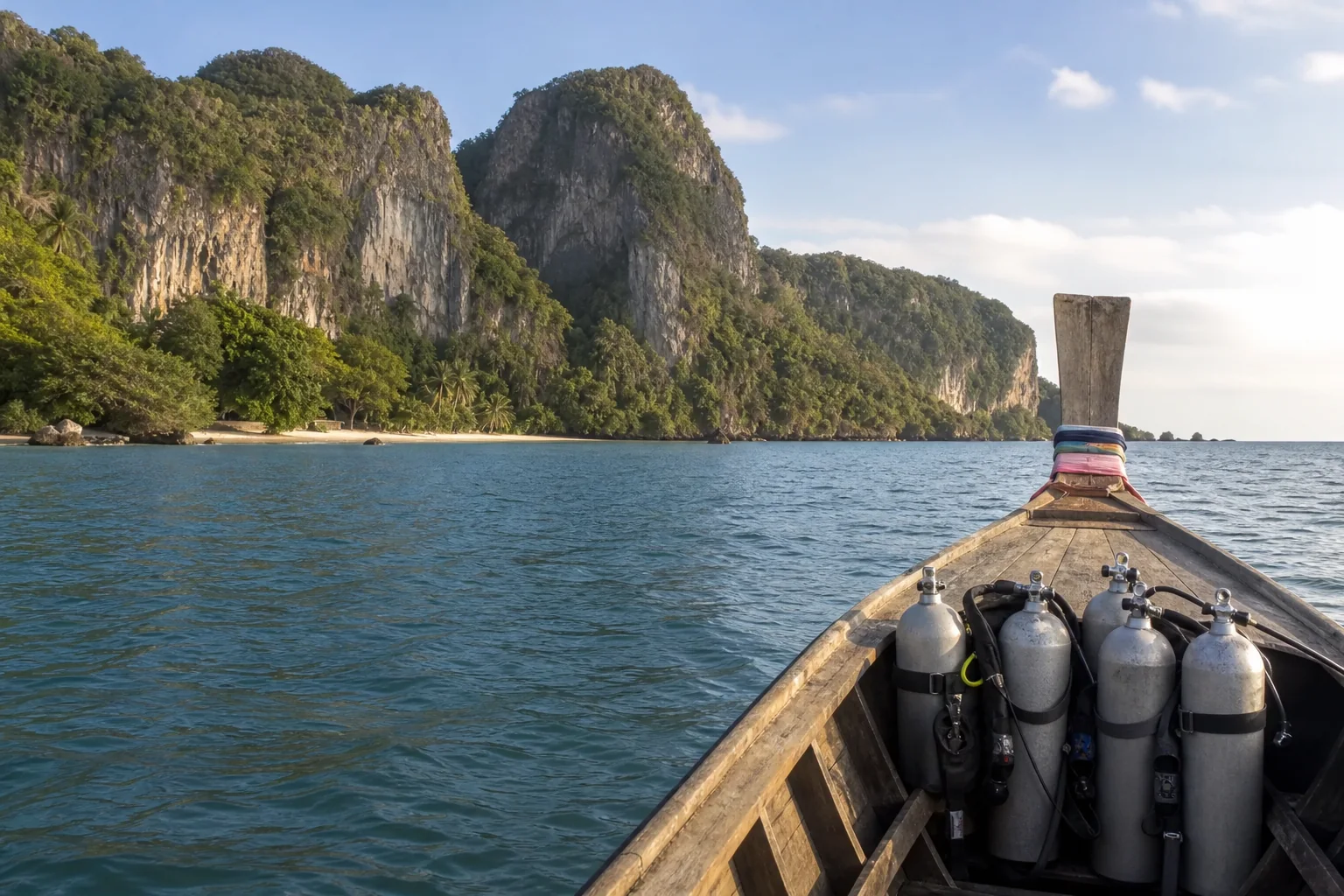
After three weeks travelling through Bangkok and northern Thailand, I settled on Koh Lanta in 2006. It became much more than another stop: this was where I completed my Rescue Diver course and Divemaster training.
The journey
From travelling through Thailand to living beside the Andaman Sea
I arrived on Koh Lanta after three weeks exploring Bangkok and northern Thailand. Instead of moving on after a few days, I stayed for a month. That longer rhythm changed the experience. The island became a temporary home, while boats, equipment preparation, training exercises and repeated journeys to the surrounding reefs became part of everyday life.
Completing both Rescue Diver and Divemaster training made this a turning point. The focus was no longer only on my own dive. It expanded to awareness, planning, assisting other divers and understanding how a dive operation works.
I have avoided inventing the name of the school, instructors or exact course schedule. Those details belong in the story once the original certification cards, logbook stamps or photographs confirm them.
Interactive dive-site map
Sites recorded in 2006
The map brings together the Koh Haa group, Bida sites, offshore pinnacles and the King Cruiser route. Select a labelled pin for further dive information.
Training
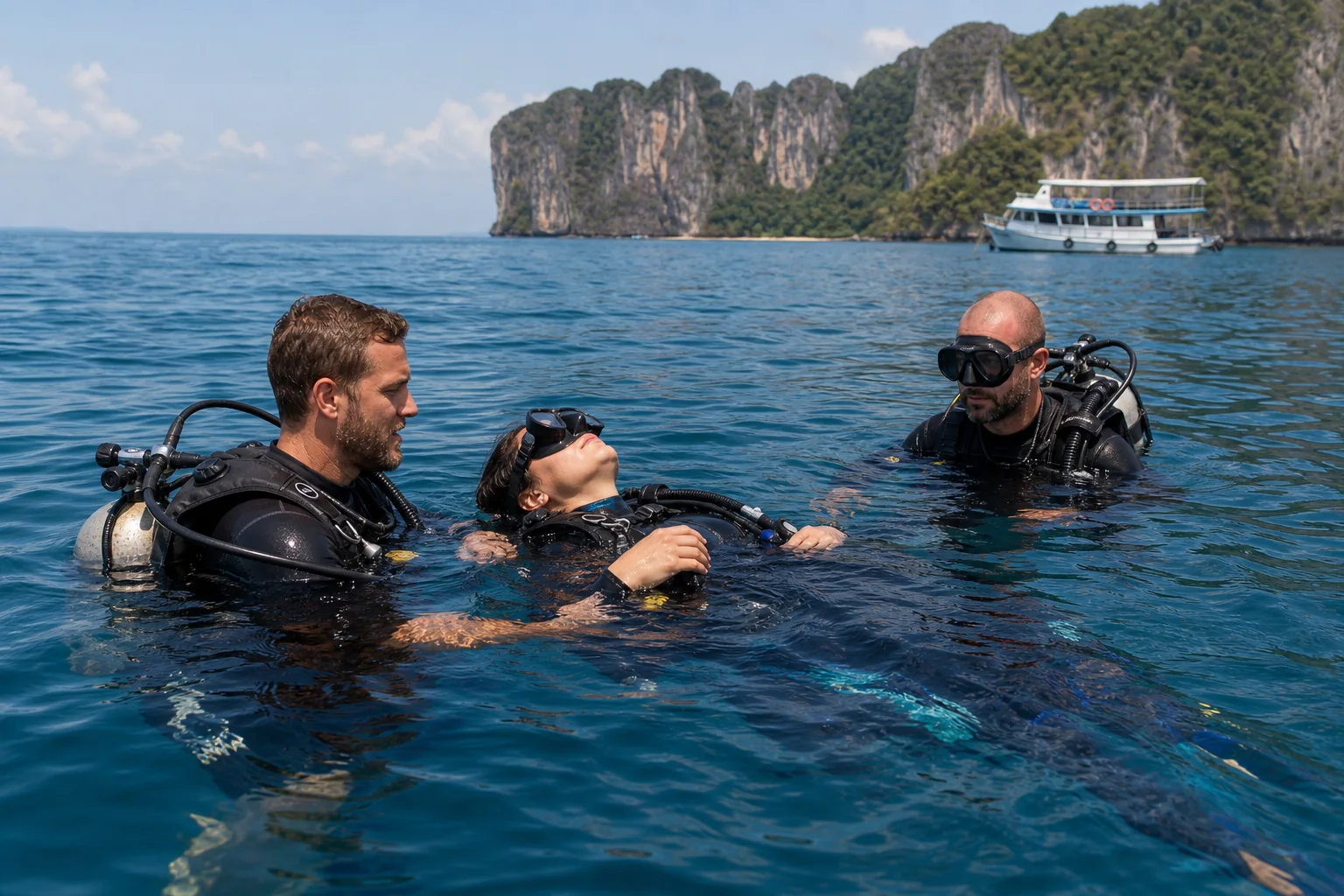
Rescue Diver and the step towards Divemaster
Rescue training changes the way a diver looks at the water. It develops anticipation, self-rescue, problem recognition and a structured response to a diver who may need help. The Divemaster course adds another layer: briefings, site awareness, guiding, equipment organisation and responsibility around less experienced divers.
Doing both while living on the island meant that the lessons could build through repetition. Koh Haa and the Bida islands offered different environments for practical experience, while the remote pinnacles demanded careful briefings and respect for depth and current.
This account is personal history, not training instruction. Divers should complete these skills with a recognised instructor and follow the procedures taught by their own training organisation.
The offshore pinnacles
Hin Daeng and Hin Muang
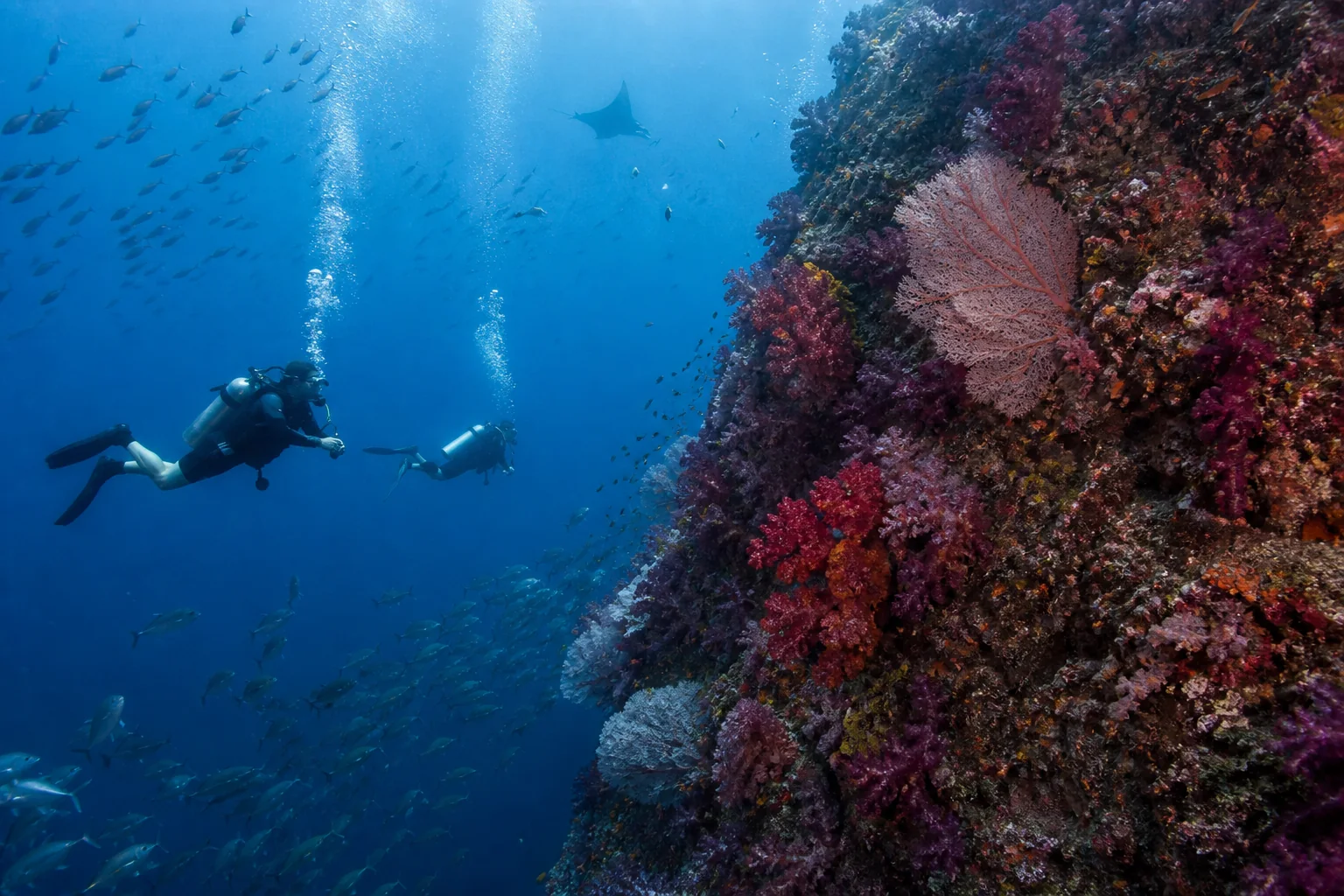
Hin Daeng means Red Rock and Hin Muang means Purple Rock, names associated with the soft corals covering these exposed offshore pinnacles. Their deeper walls and potential currents make them very different from a sheltered lagoon dive.
These are sites where the blue water is part of the dive. Schools of fish and larger passing animals are possible, but no particular encounter is guaranteed.
A varied month underwater
Lagoons, islands, pinnacles and a wreck
Koh Haa Lagoon, Koh Haa Yai and Koh Haa No. 3 belong to the limestone island group west of Koh Lanta.
Koh Bida Nok, Koh Bida Nai and Hin Bida are separate sites in the Phi Phi and Bida area.
King Cruiser brought a wreck dive into a month otherwise dominated by reefs and islands, while Palong Bay added another Phi Phi-area site. Together they made Koh Lanta a base for remarkably varied diving rather than a single type of destination.
Beyond the courses
Why living there matters to the story
A month on Koh Lanta should not be reduced to a list of dive sites. The daily boat routine, training, island journeys and slower pace after travelling through Bangkok and northern Thailand all formed part of the experience.