MolaQuest journal · Indonesia
Two weeks diving Komodo by day boat
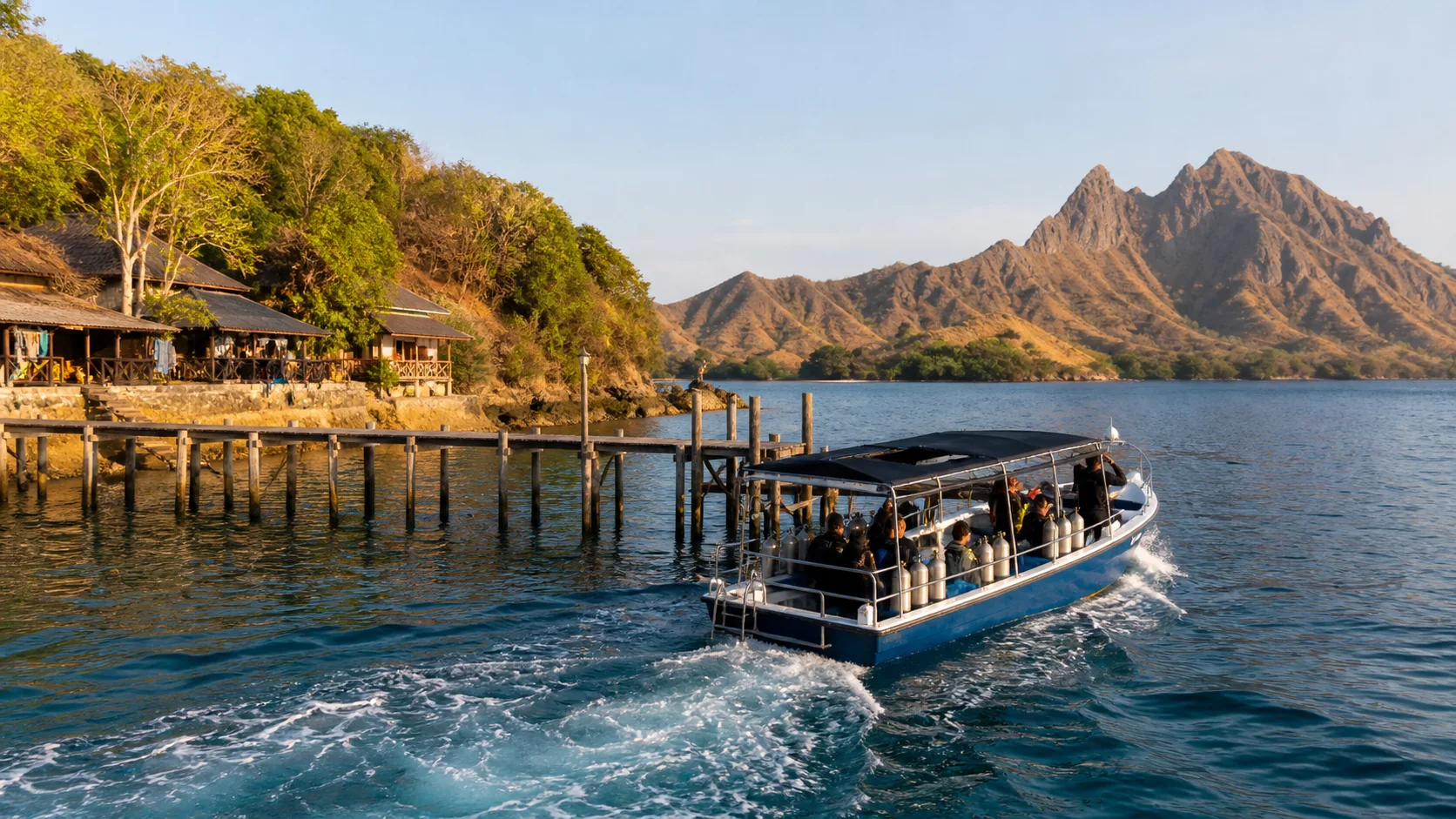
After Pulau Weh, my 2016 Indonesian journey continued with two weeks at Scuba Junkie Komodo Beach Resort, travelling from the resort each day to a remarkably varied set of sites.
Chapter two
A resort base inside a big diving landscape
Komodo is often discussed as a liveaboard destination, but this trip followed a different rhythm. I stayed at Scuba Junkie Komodo Beach Resort and used day boats, returning to the same island base after diving.
The resort format did not make the diving narrow. The list reaches from sheltered sites and macro dives to exposed pinnacles and channels where timing the tide is fundamental. Every morning’s route depended on conditions, distance and the experience of the group.
This was the middle chapter of two months in Indonesia, very different from the month-long stay on volcanic Pulau Weh and from the reef systems I would later dive in Raja Ampat.
Interactive dive-site map
Komodo sites from the notes
The map spans northern current sites, central reefs, manta areas and quieter island sites reached by day boat. Select a labelled pin for further dive information.
The famous current sites
Batu Bolong, Crystal Rock and The Cauldron
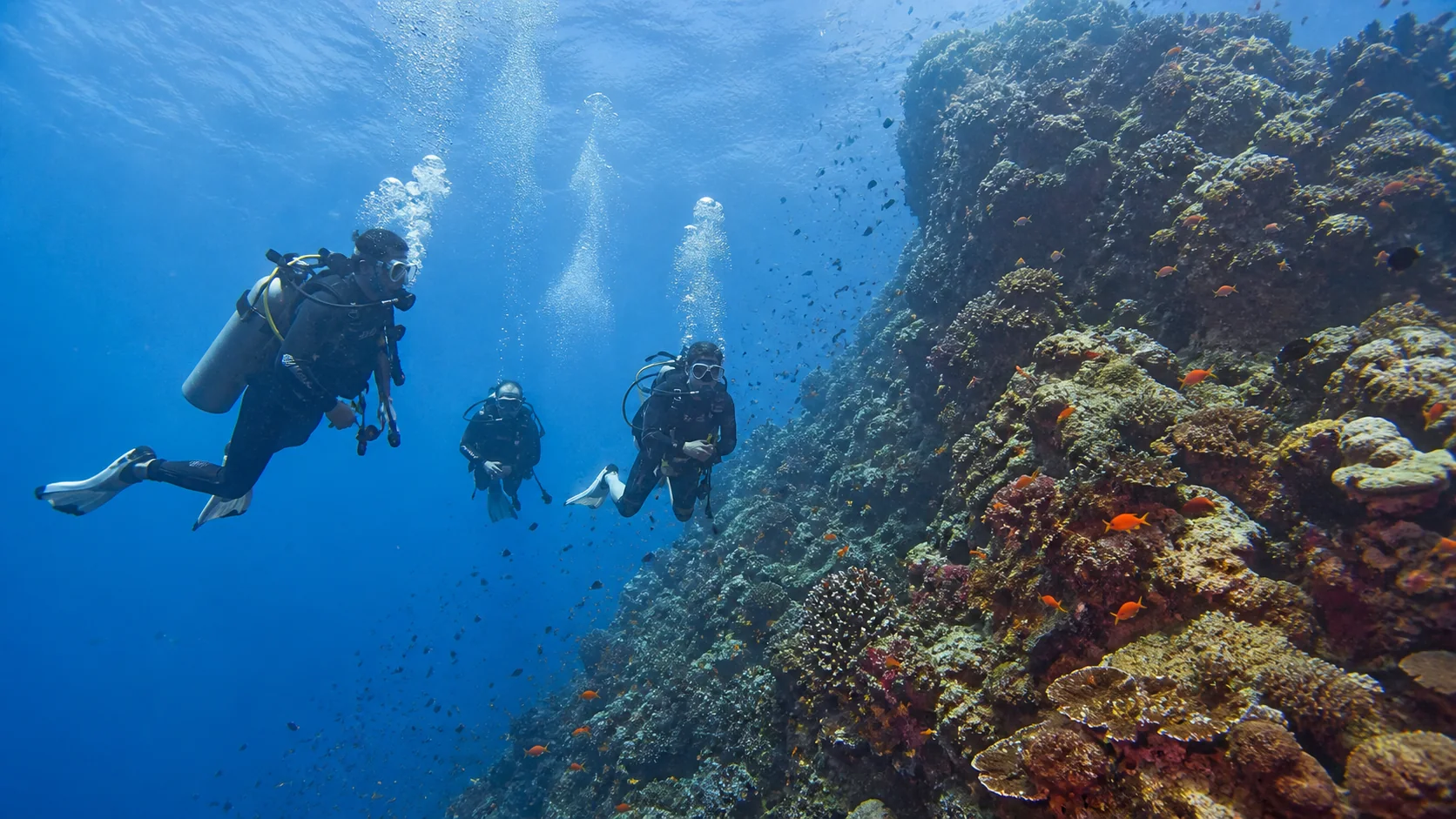
Batu Bolong and Crystal Rock are pinnacles where current concentrates fish life and determines which part of the reef can be dived safely. The Cauldron, also called Shotgun, is a channel dive in northern Komodo whose route and speed depend heavily on the tide.
These names may be famous, but they are not fixed underwater attractions. A careful local briefing, appropriate experience and disciplined positioning are central to the dive.
Mantas, drifts and quieter dives
More than the headline pinnacles
Manta Point and Karang Makassar refer to the same long reef, commonly dived as a drift. Mawan is another site associated with manta activity, but I have not added a personal sighting until my records confirm it.
Tatawa Besar, Siaba Kecil and Pengah Kecil add drift diving and coral terrain, while Siaba Besar and Sebayur Kecil can offer more sheltered profiles depending on conditions. Wainilu and Gindang bring a slower macro and muck-diving side to the itinerary. Sabolon Kecil sits north of the national park and completes the route.
Two weeks from one base
Komodo without living aboard
The memory of this chapter is not only a catalogue of reefs. It is the repeated movement from resort to boat, the changing island scenery and the contrast between demanding current sites and patient searches over quieter ground.
Personal photographs can later show the real resort, day boats, landscapes and the encounters that made individual dives stand out.