MolaQuest journal · Egypt
Back to the deep south aboard MV Blue Pearl
In 2010 I returned to Egypt’s Red Sea for a southern liveaboard route linking exposed offshore reefs, remote islands and the intricate reef systems of St John’s.
The return
A different southern Red Sea itinerary
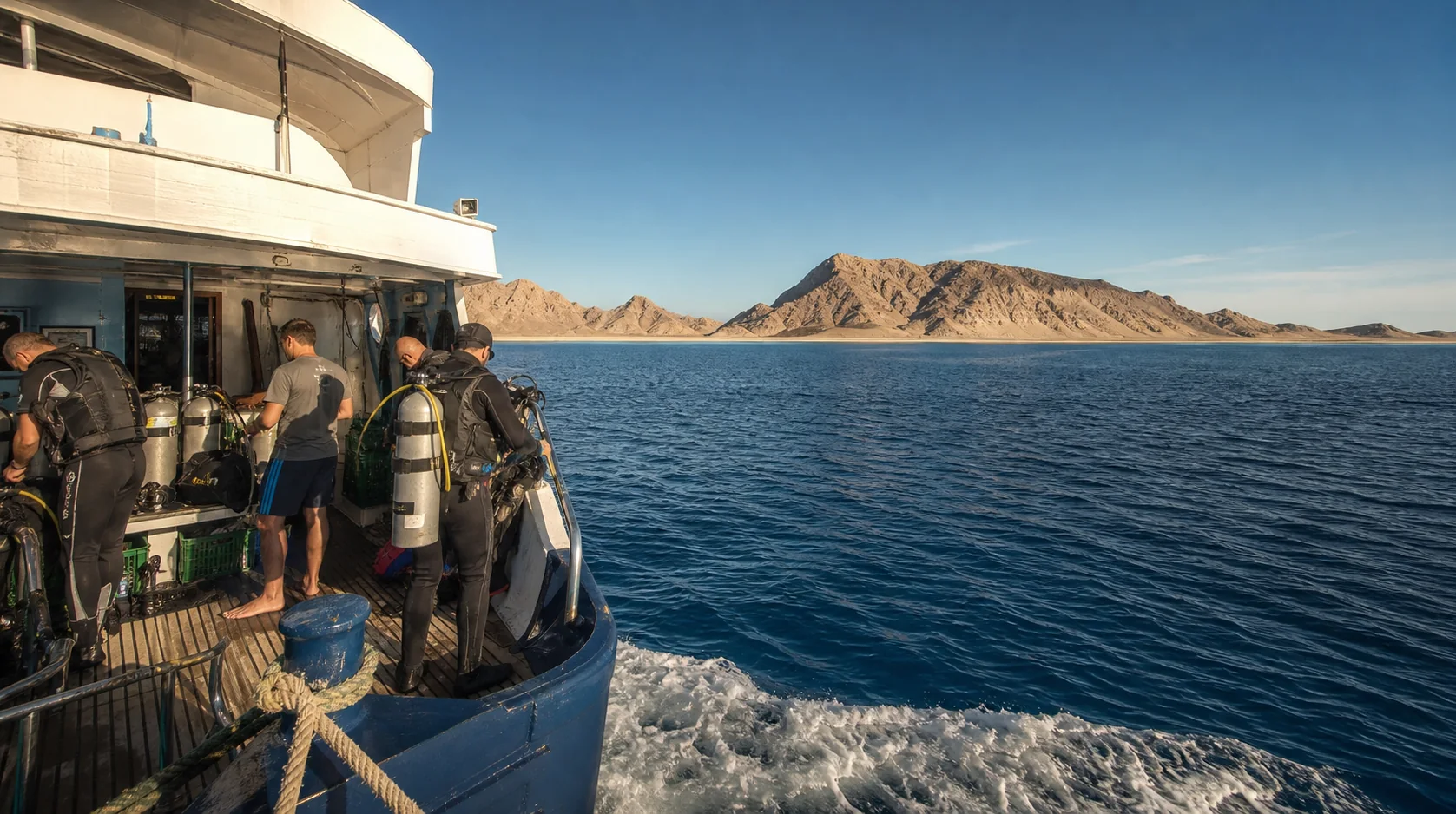
By 2010 the Red Sea was already an important part of my diving history. I had trained in Taba, completed northern and southern safaris in 2005 and travelled from Egypt to Sudan in 2008. This trip aboard MV Blue Pearl returned to the south but followed another combination of sites.
The itinerary connected Elphinstone and Daedalus with Rocky Island, Zabargad and the reefs of St John’s. It moved between exposed walls surrounded by deep water and shallower coral formations where the shape and rhythm of the dive could feel completely different.
No unrecorded wildlife encounters or boat details have been added. Those belong in the story only when supported by the logbook, photographs or personal memories.
Interactive dive-site map
Sites recorded in 2010
The route runs from Elphinstone and Daedalus to Rocky, Zabargad and the St John’s reef system. Select a labelled pin for further dive information.
Open-water reefs
Elphinstone and Daedalus
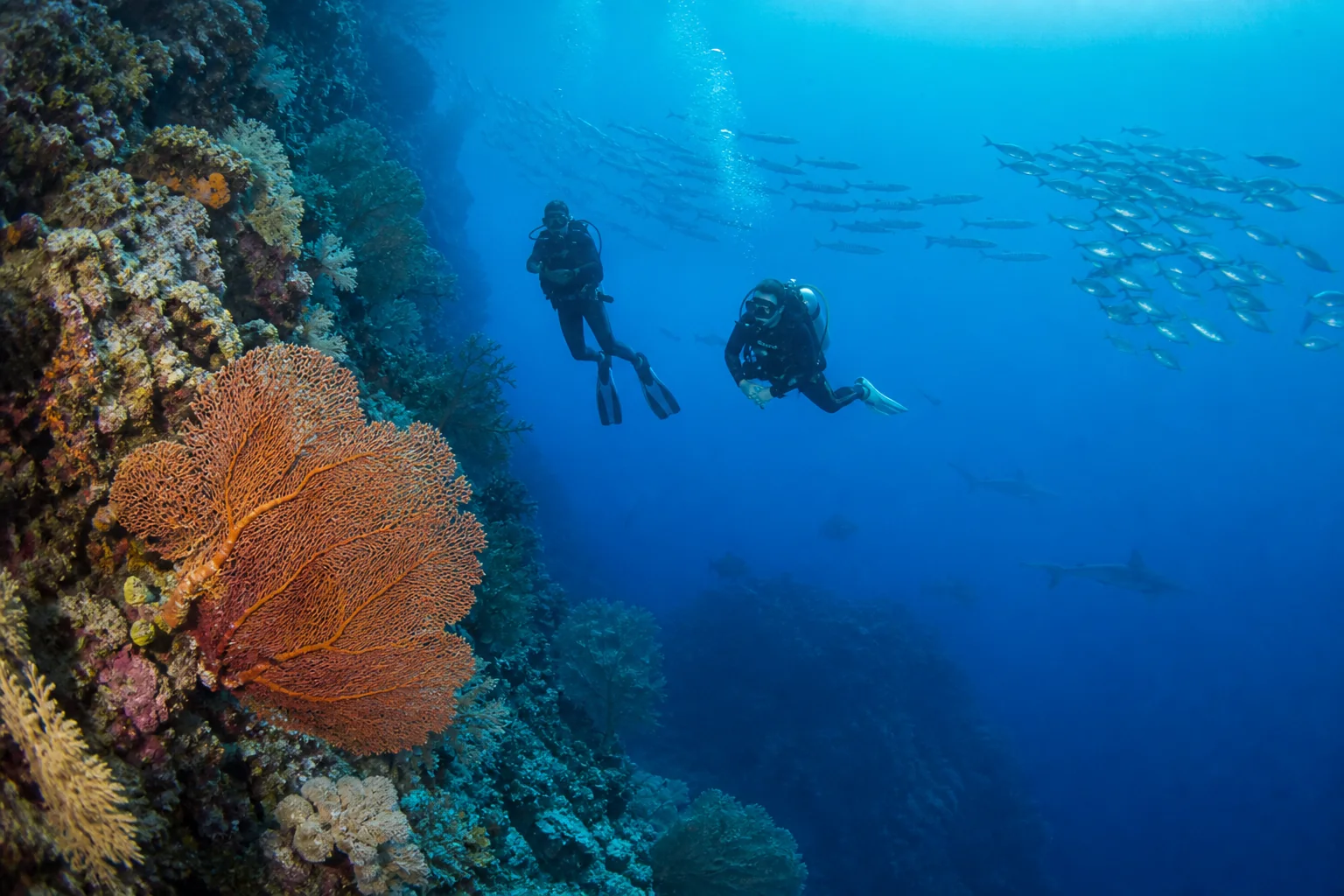
Elphinstone and Daedalus rise into open water, with steep walls and plateaus shaped by current. Both require a briefing based on the conditions on the day, because entry point, direction and exit can change with wind and water movement.
The scale of these reefs is part of their character. The wall provides structure on one side while the blue water remains open on the other, creating a dive that depends as much on awareness and positioning as on what passes through.
The deep south
Rocky, Zabargad and St John’s
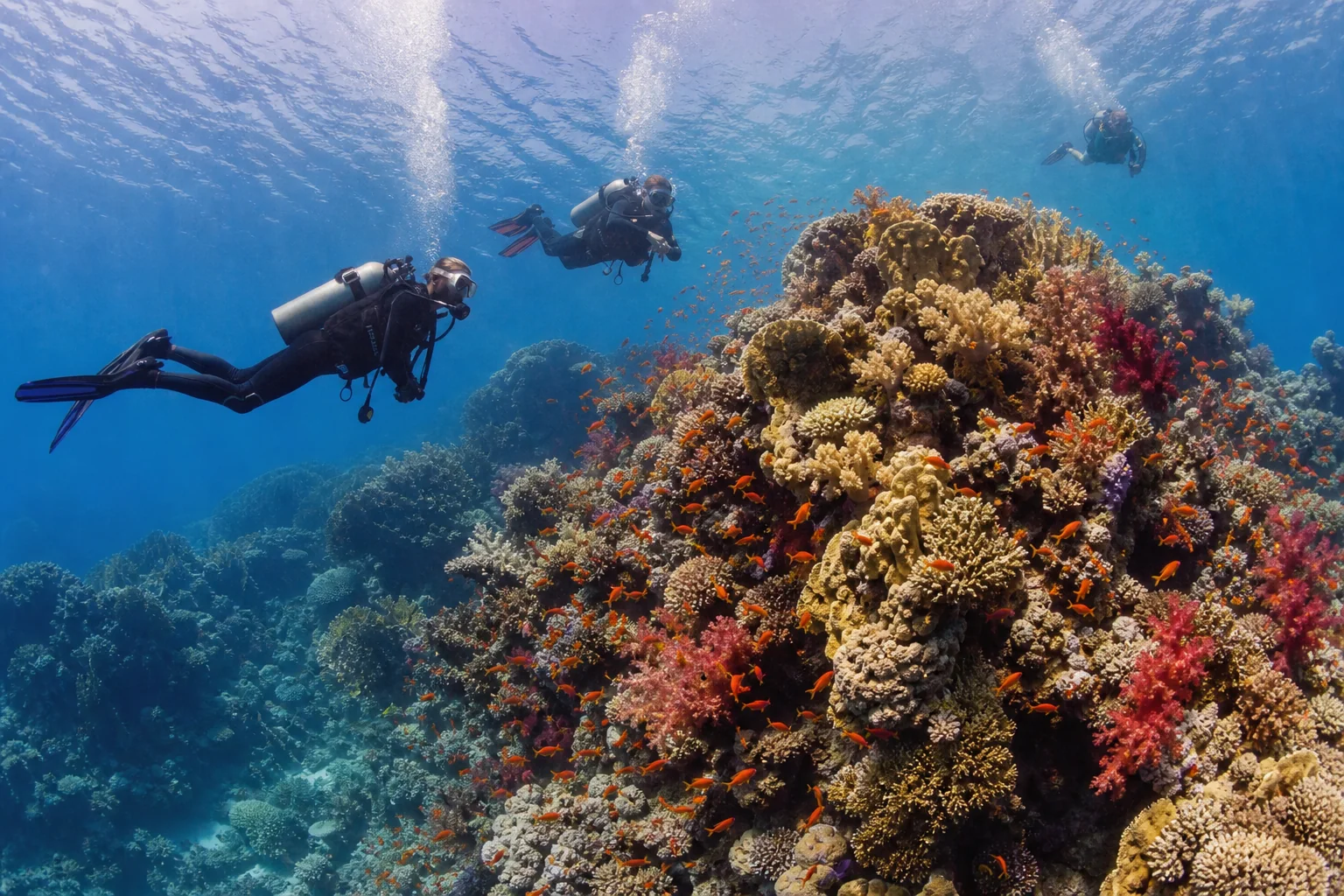
Rocky Island and Zabargad Island lie far into Egypt’s southern Red Sea and are reached by liveaboard. Rocky is associated with walls and open-water exposure, while Zabargad adds an island landscape and varied reef profiles.
St John’s is not one reef or one dive. It is a wide system of pinnacles, coral gardens, walls and passages. Habili Gaffar, the site recorded phonetically as “Habibi Ghafer”, is one of those pinnacles. “Habili” refers to a reef formation that approaches the surface without necessarily breaking it.
A chapter in a longer Red Sea story
Returning without repeating the same journey
This trip revisited Elphinstone after the 2005 MV Hurricane safari, but the addition of Daedalus, Rocky, Zabargad and St John’s made the 2010 route a distinct chapter. It shows why “the southern Red Sea” is too broad to describe a single experience.