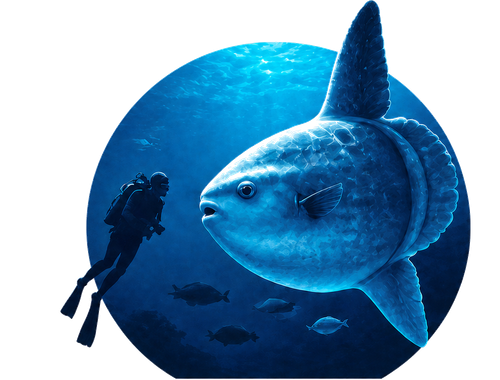
Destination
Why the Canary Islands work for year-round diving
A practical introduction to the islands, their volcanic underwater landscape, seasonal conditions and how to choose where to base yourself.
10 min read
WaterAbout 18 to 23°C
Coolest around February, warmest around August.
Diving styleShore and boat
The balance depends on the island and the chosen area.
Typical suitAsk the local centre
Many divers use 5 mm, with extra warmth in cooler months.
LandscapeVolcanic Atlantic
Rocky reefs, lava formations, sand and drop-offs.
VisibilityOften around 20 to 30 m
It varies with coast, swell and weather; official guidance says it can reach 30 m.
The islands in context
A volcanic archipelago with several kinds of diving.
The Canary Islands are a Spanish archipelago in the Atlantic, off the north-west coast of Africa. The seven main islands share a volcanic origin but offer quite different landscapes, communities and diving conditions.
Lava flows have created ledges, arches, rocky reefs and sudden changes in depth. Sandy areas separate many formations, so the underwater scenery is very different from a continuous tropical coral reef.
Interactive map
Choose a dive area and find it on the map.
Select a label below the map to highlight its pin. Zoom now moves in smaller, smoother steps and does not jump unexpectedly when you scroll. These are approximate planning markers, so confirm the exact site and conditions with a local dive centre.
Dive centres by island
Start with a recognised operator
These are planning leads from current PADI or official tourism listings, not paid placements. Before booking, confirm that the centre’s certification, insurance, boats, equipment and emergency procedures remain current, and choose a team that asks about your qualification and recent experience.
Lanzarote
Lanzarote Non Stop Divers
PADI 5 Star CDC in Playa Blanca; also listed as accredited by the Canary Islands Government.
Check current listingFuerteventuraFuerteventura Buceo
PADI 5 Star centre in Morro Jable with boat diving and multilingual staff.
Check current listingGran CanariaGran Canaria Divers
PADI 5 Star IDC in Puerto de Mogán offering shore and boat diving.
Check current listingTenerifeAquarius Dive Center
PADI 5 Star IDC and TecRec centre near Las Galletas, with shore and boat access.
Check current listingLa GomeraOfficial island directory
Use the Canary Islands tourism directory to compare currently registered diving services on La Gomera.
Check current listingLa PalmaBuceo Sub La Palma
PADI 5 Star centre in Los Cancajos, operating on La Palma since 2001.
Check current listingEl HierroCentro de Buceo El Bajón
PADI 5 Star IDC Resort in La Restinga with a locally rooted team.
Check current listingAcross the year
Water and weather at a glance
Island, coast, wind and depth all affect how a dive feels. Treat these as broad planning ranges and check the local forecast before travelling.
PeriodSeaGeneral feel
Dec to FebAbout 18 to 20°CCooler water; plan more thermal protection.
Mar to MayAbout 19 to 20°CMild air, with conditions varying by coast.
Jun to AugAbout 21 to 23°CWarmer and popular; exposed areas may be windy.
Sep to NovAbout 22 to 23°COften the warmest water after summer.
Choosing an island
Match the island to the trip you want.
Lanzarote and Tenerife suit travellers looking for a broad mix of diving and activities away from the water. Gran Canaria combines varied infrastructure with established diving areas. El Hierro is quieter and works well for a dive-led trip based around La Restinga.
La Palma and La Gomera appeal to visitors who also want walking and a slower island atmosphere. Fuerteventura offers broad beaches and open landscapes, although wind and sea state can influence boat operations. Ask centres for the normal balance between shore and boat dives before choosing a base.
Shore or boat?
Choose the way you want to dive.
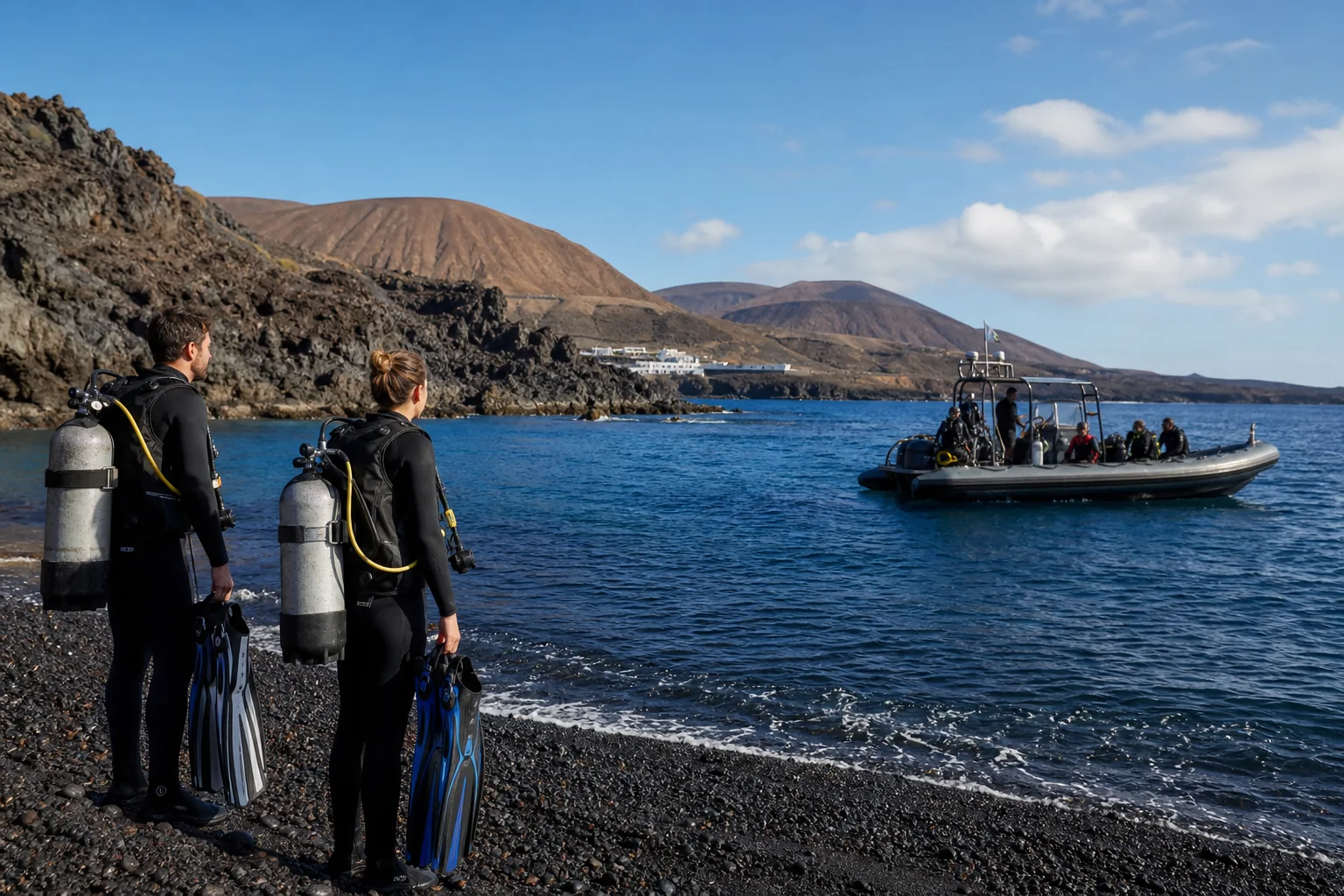
Both shore and boat diving are available across the archipelago. Lanzarote, La Palma and parts of Tenerife are known for shore-access sites. Boats provide access to walls, offshore reefs and places where a shore entry would be impractical.
A shore dive can still involve steps, rocks or a walk in full equipment. Before booking, ask how entries are managed, whether staff carry cylinders, how long boat journeys take and what happens if wind or swell affects the planned site.
What you may see
Atlantic marine life over volcanic terrain.
Divers may encounter rays, moray eels, octopus, barracuda, groupers, trumpetfish and a range of Atlantic reef fish. Turtles are seen in some areas.
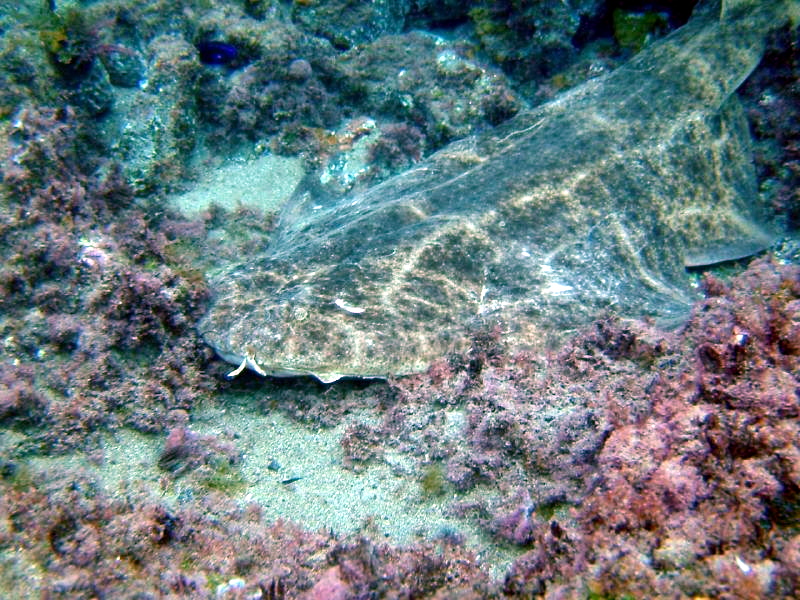
Angel sharks are closely associated with the Canaries, particularly sandy habitats, but no wildlife sighting is guaranteed. The lava formations and smaller species are part of the experience, so this is a destination where slowing down pays off.
Away from the water
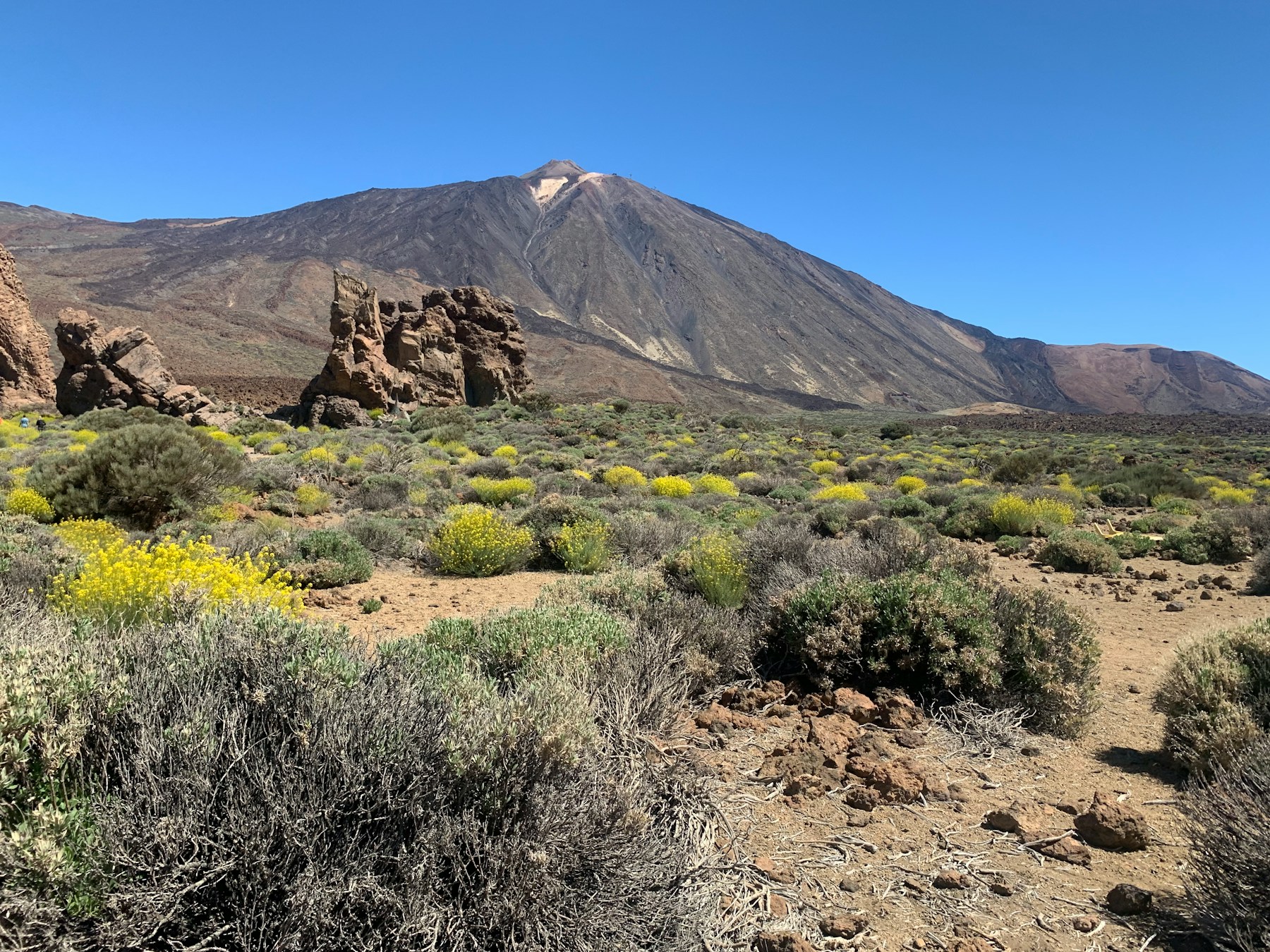
Mount Teide and a completely different landscape.
Mount Teide rises to 3,715 metres and is the highest peak in Spain. Its national park is a UNESCO World Heritage Site, with lava fields, striking rock formations and high-altitude views far removed from the coast.
Some summit routes require advance booking and mandatory equipment. Divers must also plan conservatively around altitude after diving. Check official park information and discuss the timing with a qualified dive professional.
What to eat
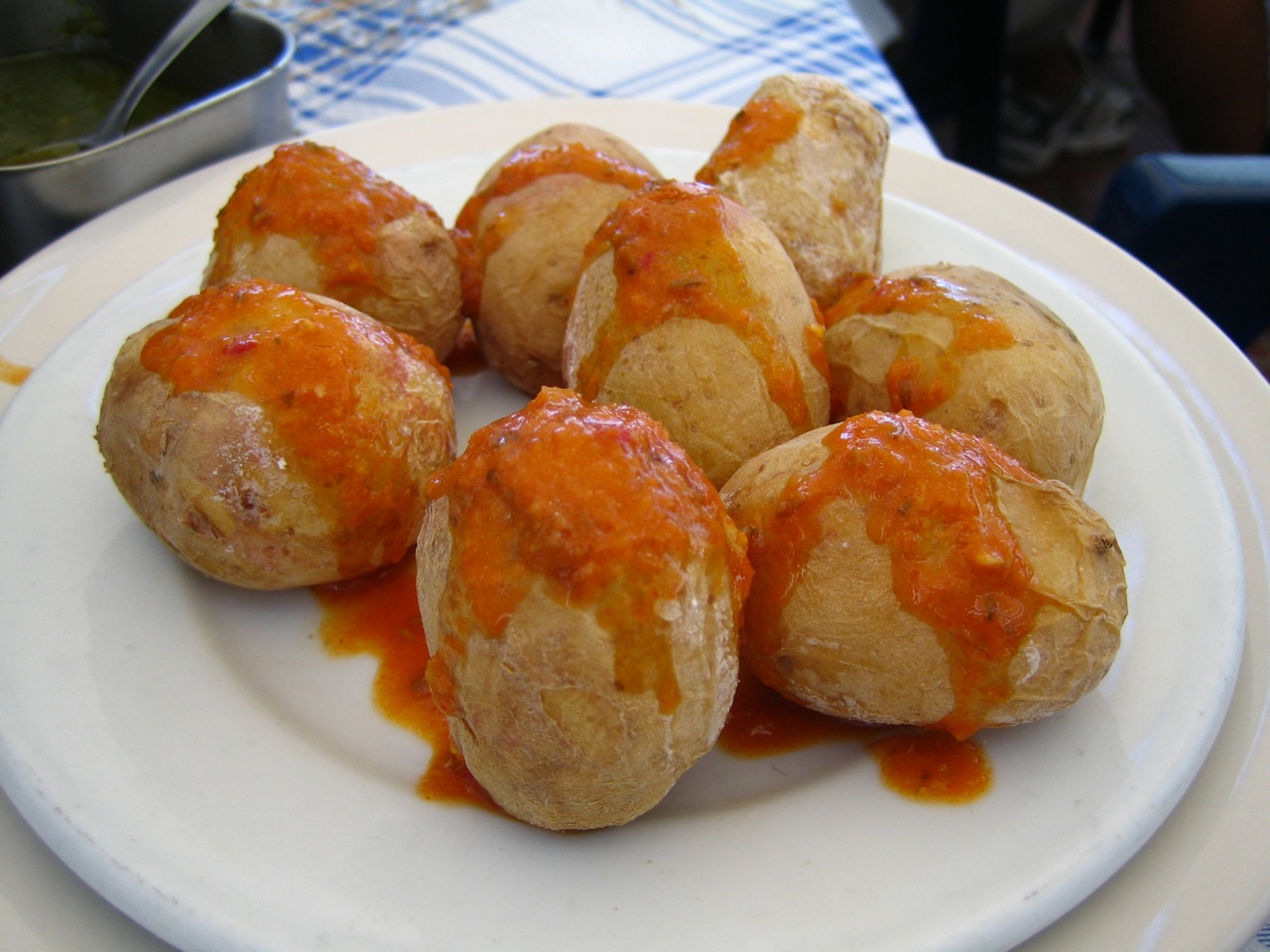
Papas arrugadas with mojo picón.
The classic local potato dish is papas arrugadas con mojo picón, not papas bravas. Small potatoes are cooked until their skins wrinkle, then served with mojo, usually a spicy red sauce or a green herb-based version.
Also look for grilled local fish, Canarian cheeses and gofio-based dishes. In Tenerife, a guachinche is a simple local establishment traditionally associated with local wine and home-style food.
Getting there
Start with the island, then choose the airport.
From London: Tenerife South, Gran Canaria, Lanzarote and Fuerteventura have the widest choice of direct services. La Palma has fewer direct options; El Hierro and La Gomera are commonly reached via another Canary island.
From the USA: most journeys connect through Madrid, Lisbon or another major European hub before continuing to Tenerife or Gran Canaria.
From Australia or China: expect at least one or two connections, commonly through a major European or Middle Eastern hub, followed by a flight to Tenerife, Gran Canaria, Lanzarote or Fuerteventura.
Routes change by season. Check the live airline timetable before booking, and allow enough time between your final dive and flight.
Practical planning tips
Questions to answer before booking.
- Choose a centre that asks about certification, recent experience and medical fitness before recommending sites.
- Confirm whether dives are from shore or boat and ask how challenging the entries are.
- Check whether equipment, insurance, marine-reserve fees and transfers are included.
- Ask about cylinder type and valve compatibility if you are bringing your own regulator.
- Bring exposure protection for the water temperature, not only the warm air on land.
- Keep the final day free from diving before flying and follow your training organisation's no-fly guidance.
- Discuss any journey to Teide or another high point after diving with a qualified dive professional.
- Leave room in the itinerary for wind, swell and other weather changes.
Join the conversation
Share your Canary Islands experience
Tell other divers about a favourite site, a helpful local centre, conditions you encountered or a practical planning tip. Comments must remain respectful. Abusive or obscene messages will be removed, and repeat offenders may be blocked from commenting.
Be the first to share an idea about diving in Canary Islands.