MolaQuest journal · Indonesia
A month diving at Indonesia’s western edge
My two-month journey through Indonesia in 2016 began on Pulau Weh. I stayed for about a month, long enough for the island and its dive sites to become part of everyday life rather than a quick stop on an itinerary. In 2017 I returned to the same island base.
The first Indonesian chapter
Starting in the far west
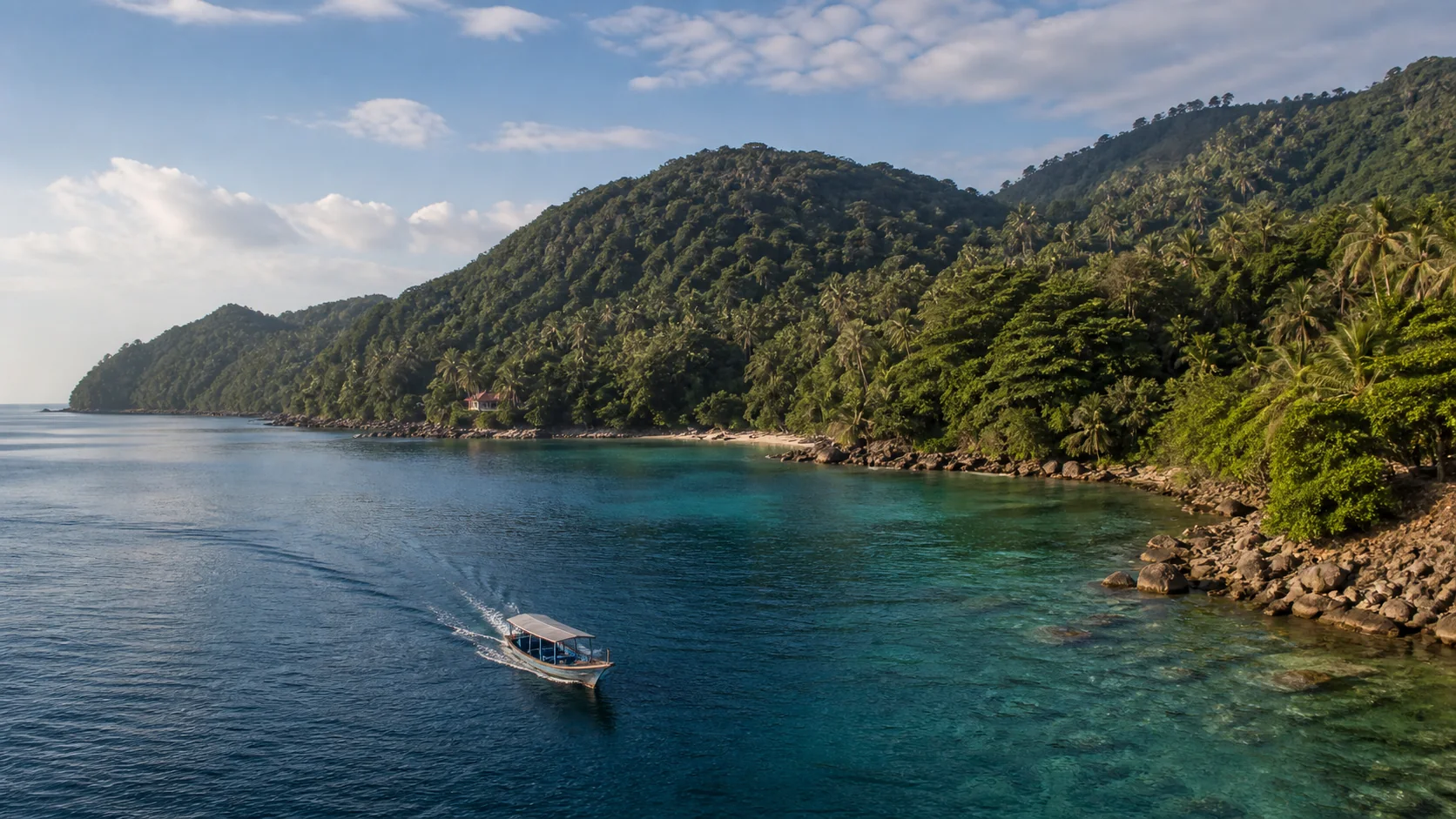
Pulau Weh sits just off the northern tip of Sumatra, within the city of Sabang in Aceh. It is a volcanic island facing the Andaman Sea and is often described as Indonesia’s western edge. Nearby Rubiah and Seulako are small islands, but their channels, slopes and exposed points account for many of the dives in this story.
A month changes the way a place feels. There was time to return to different sides of Rubiah and Seulako, move between easier reefs and current-swept sites, and experience the island above water between dives. This was the beginning of a wider two-month journey across Indonesia, not the whole story.
Pulau Weh is also culturally distinct. It is part of Aceh, where local customs and dress are more conservative than in some other Indonesian holiday destinations. That context is worth understanding before travelling, just as much as tides and dive conditions are worth understanding before entering the water.
Interactive dive-site map
Sites recorded during the month
The map covers Rubiah and Seulako, the Gapang coast, Sabang and Pulau Weh’s exposed outer reefs. Select a labelled pin for further dive information.
Rubiah and Seulako
Different faces of the smaller islands
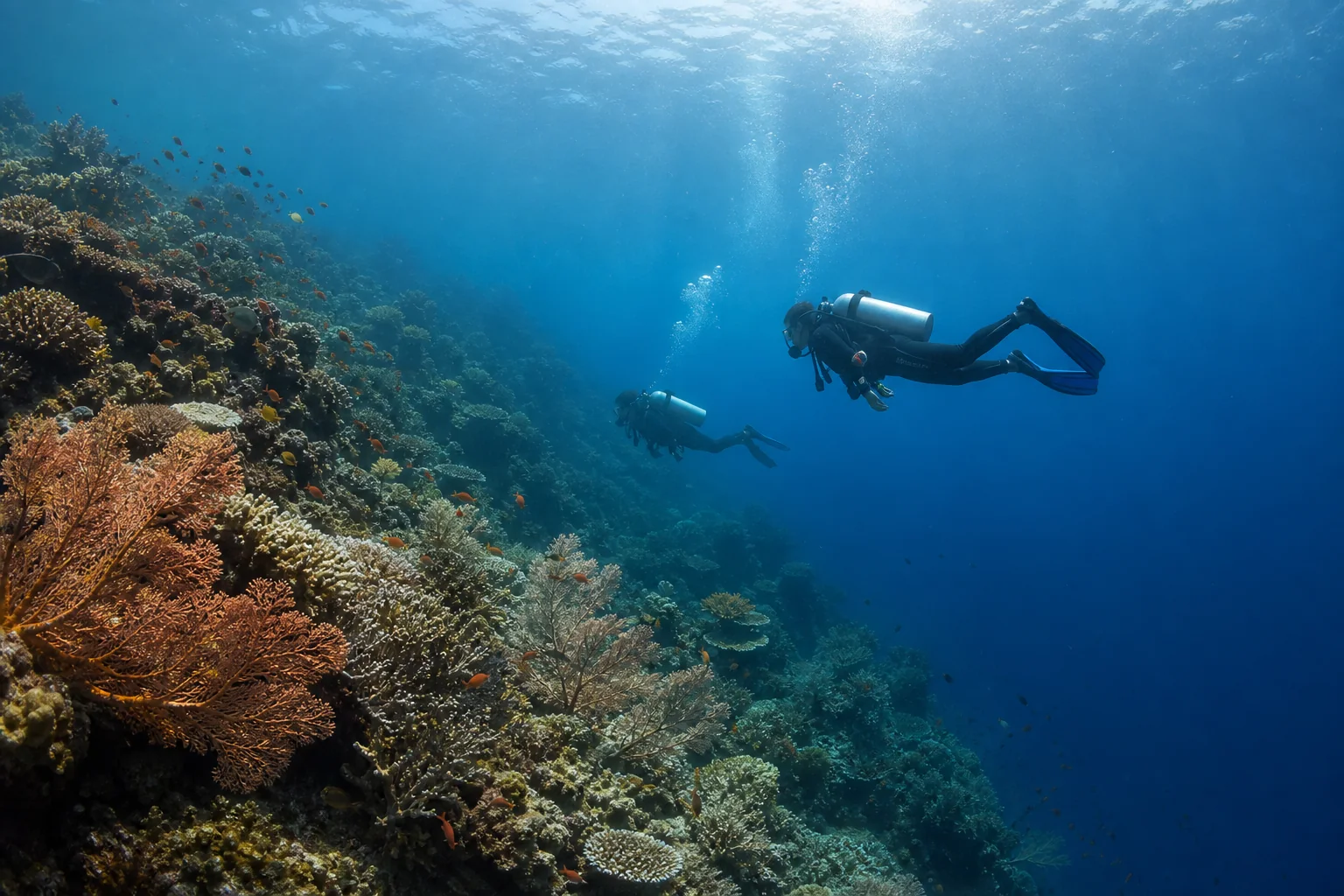
The log includes West Seulako, East Seulako, West Rubiah, North Rubiah and Rubiah Sea Garden. Together they show how a compact area can offer several kinds of dive, from sloping reef and coral gardens to channels where the movement of water becomes part of the plan.
Arus Balee, remembered in my notes as “Arus Palae”, lies in the passage between Rubiah and Seulako. Its name is closely associated with current, so it is a site where the local briefing, tide and entry point matter more than a fixed description in a guidebook.
Rock, blue water and current
Batee Tokong, The Canyon and Pantee Peunateung
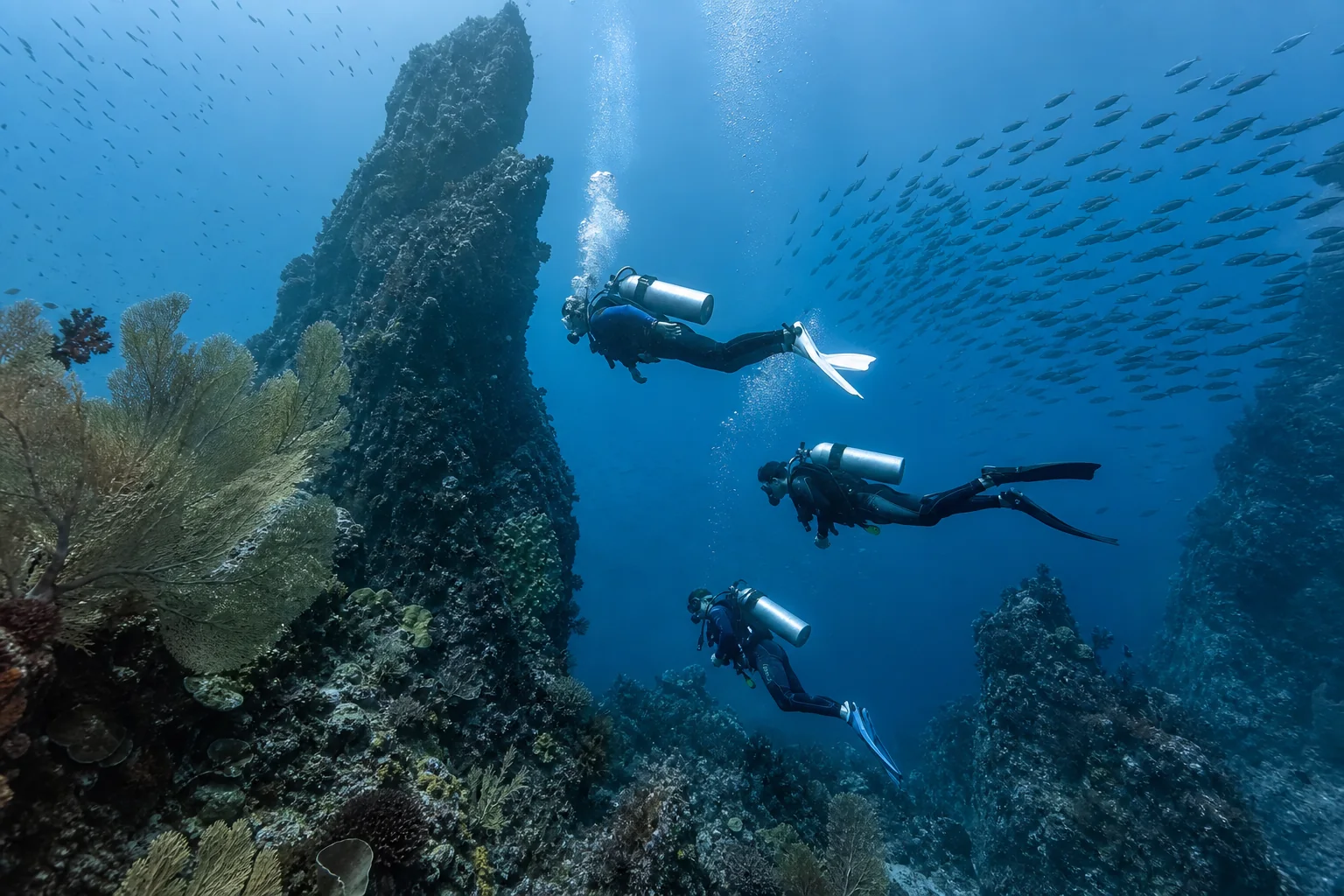
Batee Tokong is an exposed rocky pinnacle, while The Canyon is known for deeper rock formations and swim-through topography. Pantee Peunateung adds another dramatic site on the island’s outer coast. These are not dives to reduce to a list of possible animals. Their character begins with rock, depth, tide and water movement.
Conditions can vary considerably. Current-sensitive sites need a qualified local guide, an appropriate experience level and a plan based on the conditions that day. A month on the island offered more opportunity to wait, return and see how the same coastline could change.
Closer to Gapang and Sabang
Reefs and wrecks within the wider island story
Batee Meuronron and Batee Dua Gapang belong to the group of sites around the Gapang side of the island. The Sabang Wreck adds a historic harbour-area wreck to the island’s range of dives.
One month, not one highlight
Letting an island become familiar
Pulau Weh was the western starting point of two months in Indonesia. Staying for about a month meant the story was not defined by a single famous site. It was built from repeated boat journeys, different sides of Rubiah and Seulako, exposed reefs, calmer gardens and the life of the island between dives.
This is the first 2016 Indonesia chapter. The journey then continued east through Komodo and Raja Ampat, creating three distinct accounts from the same two-month trip.
The return
Back to Bixio in 2017
In 2017 I returned to Pulau Weh and chose exactly the same arrangement: the same place to stay and the same diving operation. My accommodation was Bixio Café and Bungalows, a small beachfront place near Iboih run by Luca and Eva.
Returning made this more than a destination revisited from a logbook. There was familiarity in the coastline, the daily journey to dive and the people behind the place. Public sources from the period remember Bixio for its few bungalows, beachfront setting and Italian-Indonesian food.
Bixio is now permanently closed. Luca died in 2019, and this part of the article is included as a quiet acknowledgement of the welcome and place he helped create. The circumstances of his death are deliberately not repeated here because they are not part of the diving story I want to tell.