MolaQuest journal · Egypt
Taba Heights, 2003: Where Scuba Diving Started for Me
An unusually good-value holiday, an Open Water course at Red Sea Waterworld and the moment a passing curiosity became part of my life.
In 2003, my then-partner and I found an amazing deal for two weeks in Taba Heights, Egypt. It was all-inclusive, in a five-star Marriott hotel, and remarkably cheap for what we were getting. I can't remember exactly what we paid now, but I do remember thinking it was almost too good a deal to turn down.
Taba Heights was still quite new then. There were only a handful of hotels and quite a lot of empty space waiting to be developed. There seemed to be big plans for the area.
The Marriott itself was excellent: a huge resort with several swimming pools, gardens, restaurants and the Red Sea directly in front of us. With everything included, we could quite easily have spent two weeks eating, drinking and sitting around the pool.
But we'd already become curious about scuba diving.
On a previous holiday in Madeira, we'd done a try dive. It wasn't anything particularly adventurous. In fact, it was far noisier than I thought and very confusing, with all those bubbles in your face, a very restrictive full wetsuit and hood, lots of kilos on the weight belt, and a mask getting foggier and foggier while I checked how dirty the swimming pool tiles were. We then walked to the jetty, jumped into the sea and pulled ourselves down a rope in very shallow water until we reached a brick on the seabed, which was our sign to return. Not the most glamorous experience ever. We didn't see much apart from a few fish, but strangely enough we'd both enjoyed it and came away really intrigued by this mysterious world and wanting to know more. So, when we discovered that we could learn properly while we were in Taba, we decided to go for it and signed up with Red Sea Waterworld at the marina to do our PADI Open Water Diver course.
I soon discovered that enjoying diving and actually being good at it were two very different things.
My main problem was my breathing. I just couldn't relax enough underwater and went through my air far too quickly. Other people seemed perfectly comfortable while I would look at my pressure gauge after half an hour and realise that, yet again, I was running low.
My buoyancy wasn't much better. I'd put some air into my BCD and start going up, release some and start going down, then add some more and go back up again. I spent a fair amount of those early dives moving vertically when I was supposed to be moving horizontally.
Thankfully, it gradually got better.
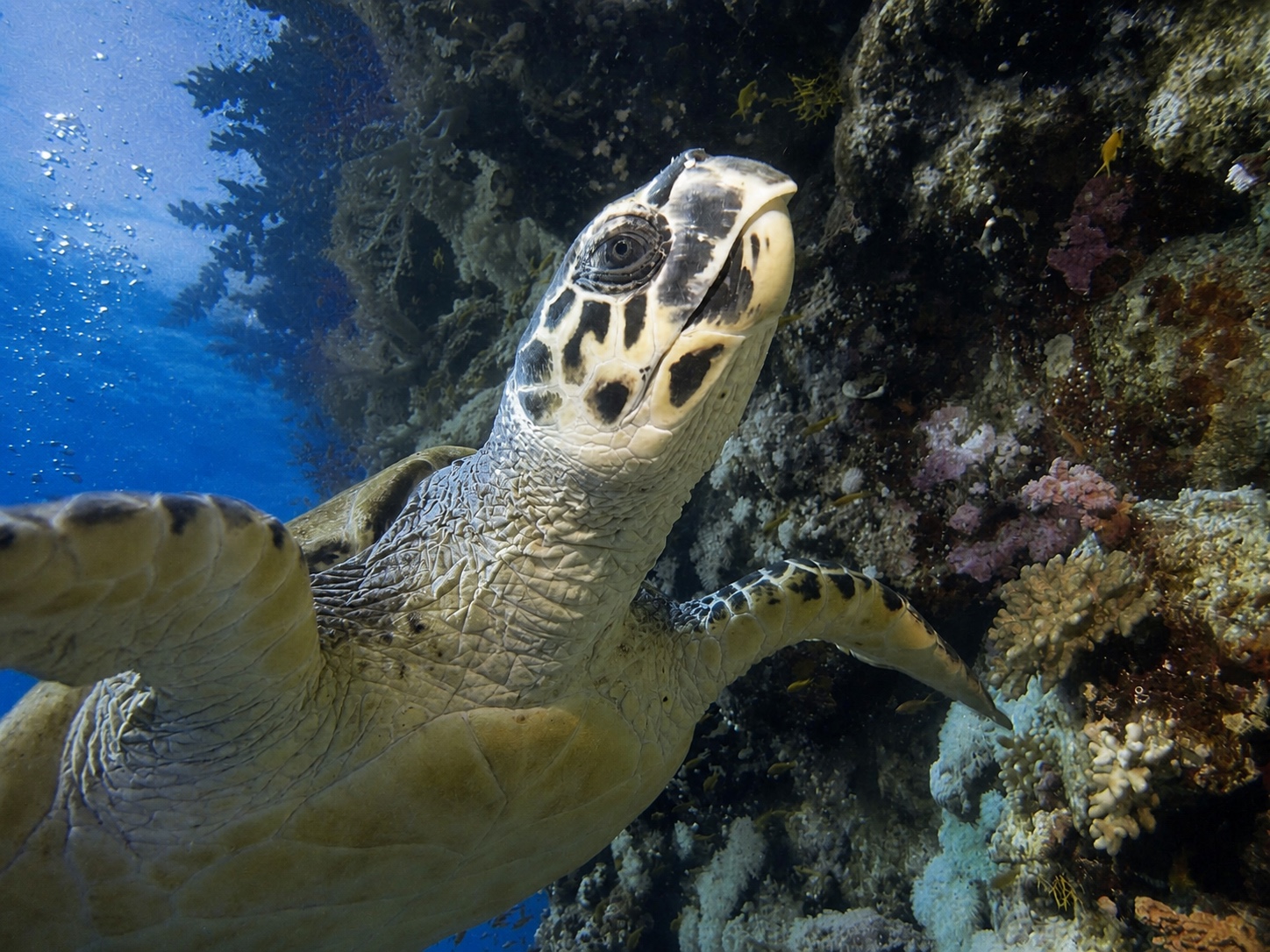
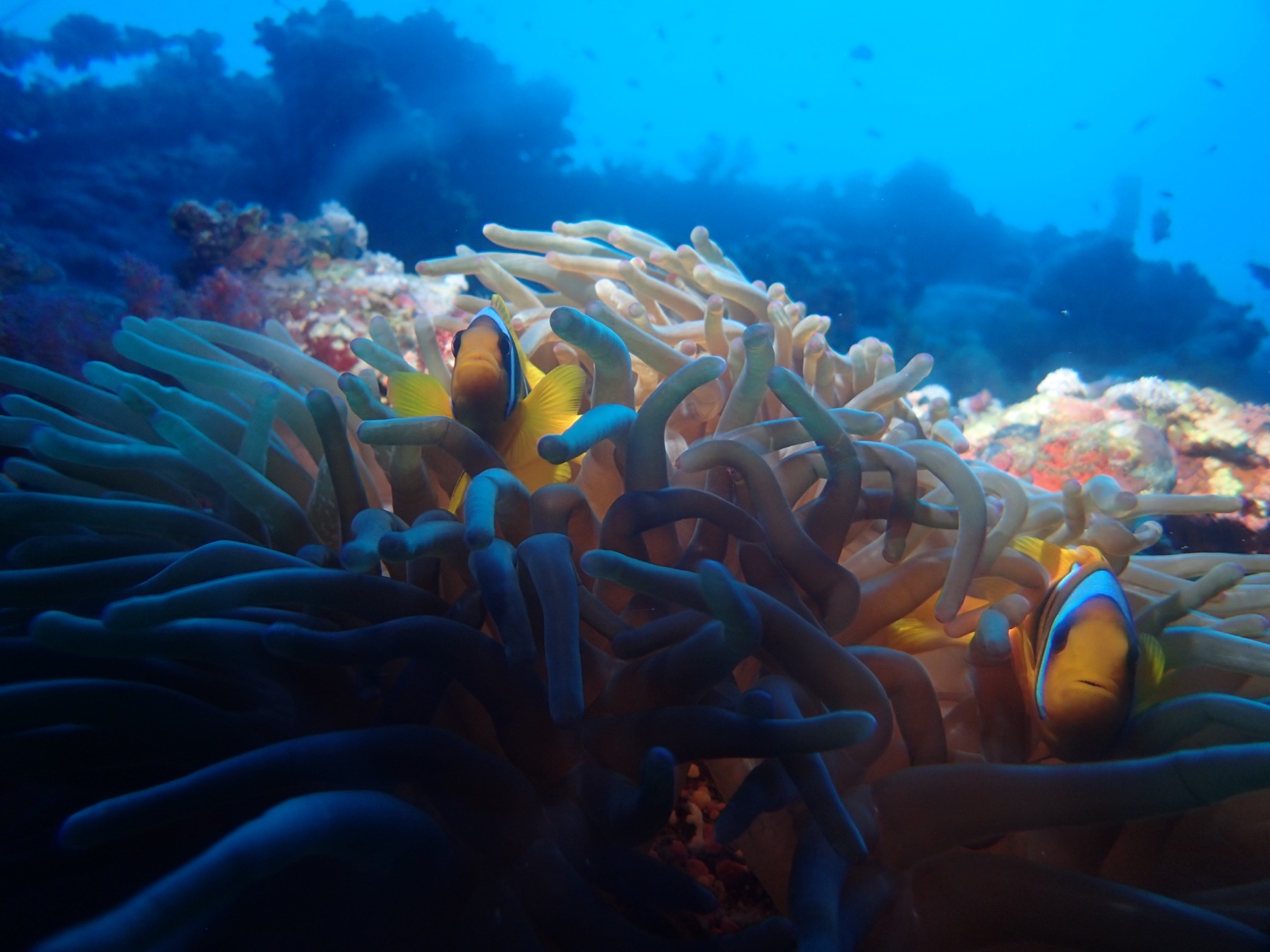
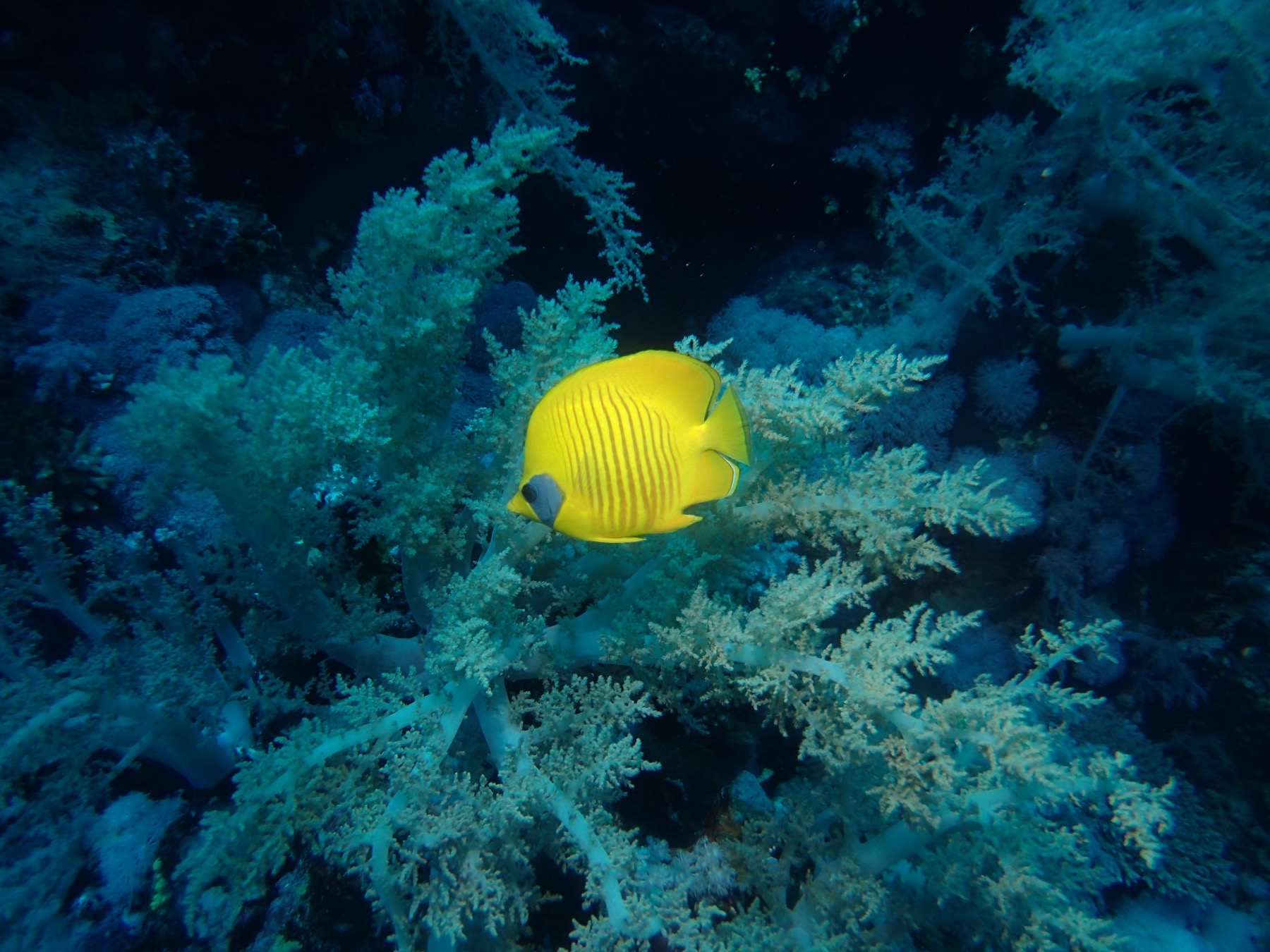
We dived several of the local sites, including the Aquarium, Ras Amira and Farum Island. The visibility was excellent and, as complete beginners, almost everything we saw was new to us. There were lots of anthias around the reefs, moray eels hiding in holes and scorpion fish that I would probably have swum straight past if somebody hadn't pointed them out.
One particular dive also taught me something I've never forgotten, although not because anybody had planned to teach it to me.
Our instructor accidentally dropped a dive computer. I saw it falling below us and, without giving it much thought, immediately went after it. It was pure instinct: something valuable is falling, so you go and get it.
Unfortunately, that's not a particularly sensible instinct when you're underwater.
I went down after the computer without checking my depth, my buddy or even what the instructor wanted me to do. She quickly followed me, caught up and stopped me from continuing. The incident meant that we had to be particularly careful with our ascent and spend considerably longer than usual stopping before returning to the surface.
Back on the boat, the instructor explained why what I'd done was so stupid. I'd effectively ignored everything we'd been learning because I'd seen a piece of equipment disappearing below me. The computer could be replaced. There was absolutely no point taking a risk to retrieve it.
I felt pretty embarrassed, but I never forgot it.
Over the two weeks I slowly improved. My buoyancy became a bit more controlled; I started breathing a little more normally and my air began lasting longer. By the end of the holiday, we'd completed the course and qualified as PADI Open Water Divers.
We didn't spend the whole two weeks just diving. One of the excursions I remember particularly well was to the Coloured Canyon in the Sinai. It really was beautiful, with narrow passages between sandstone walls and some extraordinary colours and formations.
Unfortunately, I remember something else about it just as clearly, something I have seen quite often on my many later trips to Egypt.
In one area, there was an enormous amount of rubbish. Hundreds, possibly thousands, of discarded plastic water bottles had gathered together. Seeing so much plastic in such a beautiful natural place was shocking, and I simply had not expected it. It felt sad to see that kind of neglect in such a beautiful part of the world. I completely understand that some areas may lack the infrastructure and funding needed to keep places clean and tidy, but it also made me realise there is a need for more personal responsibility and accountability, starting with us tourists and visitors, but also with local people. I have seen the same thing in other parts of the world that may not be as developed, although Egypt itself is a middle income country. If each of us at least kept our own front and back yard clean, it could make a huge difference.
I don't know how easy or advisable it is to visit the canyon today. The security situation in parts of the Sinai has changed considerably since then, and the same applies to places such as St Catherine's Monastery. It's strange to think that somewhere you visited quite casually more than twenty years ago may no longer be as straightforward to visit.
We also made the long trip to Cairo.
Before going there, I'd somehow imagined the pyramids standing alone in the middle of an empty desert. The reality was rather different. Cairo and Giza had grown right up around them, and seeing these ancient structures with a massive modern city immediately alongside them was part of what made the place so interesting.
We visited the Egyptian Museum as well, which was another highlight. And naturally, no organised excursion would have been complete without being taken somewhere to buy souvenirs.
On the way back we stopped at one of those places clearly designed for tour groups, where we were shown perfumes and papyrus. We duly played our part as tourists and came away with an oil-based perfume and some papyrus to take home.
More than twenty years later, though, the main thing I associate with that holiday isn't the hotel, Cairo or even the pyramids. It's learning to dive.
I'd tried scuba diving once in Madeira because it looked interesting. Then an unusually cheap two-week holiday in Taba gave me the opportunity to take it further.
I wasn't very good at it initially. I couldn't control my buoyancy, I used my air ridiculously quickly and I once chased a dive computer into deeper water without stopping to think about what I was doing.
But I loved it.
Taba Heights was where I became an Open Water Diver, and it was the beginning of something that would end up becoming a very big part of my life.
Many photographs in this story come from the MolaQuest personal Red Sea archive. They illustrate the region and were not necessarily taken during the particular trip described.
Interactive dive-site map
Taba Heights and the Gulf of Aqaba
The first dive chapter took place on the western shore of the Gulf of Aqaba, close to the Sinai mountains. Select a labelled pin for further dive information.
Explore the area
Taba Heights and the Gulf of Aqaba
The first dive chapter took place on the western shore of the Gulf of Aqaba, close to the Sinai mountains.
Planning the journey today
When to go and how to get there.
From London, the most practical current route is usually a flight to Sharm el-Sheikh followed by a pre-arranged road transfer to Taba Heights. Taba airport schedules can be limited and variable.
From Europe and other origins, connect through Sharm el-Sheikh or Cairo. Aqaba is geographically close but crossing arrangements and regional conditions make it essential to verify the route before booking.
Travel conditions in Sinai can change. Read current official advice, confirm insurance cover and use established transfers. Historical excursions described in this story should not be treated as current travel recommendations.