MolaQuest journal · Tunisia
Tunisia, 2004: Advanced Open Water and Learning to Say No
Cold early-season water and a difficult training exercise in Hammamet taught me that experience never removes a diver’s responsibility for their own safety.
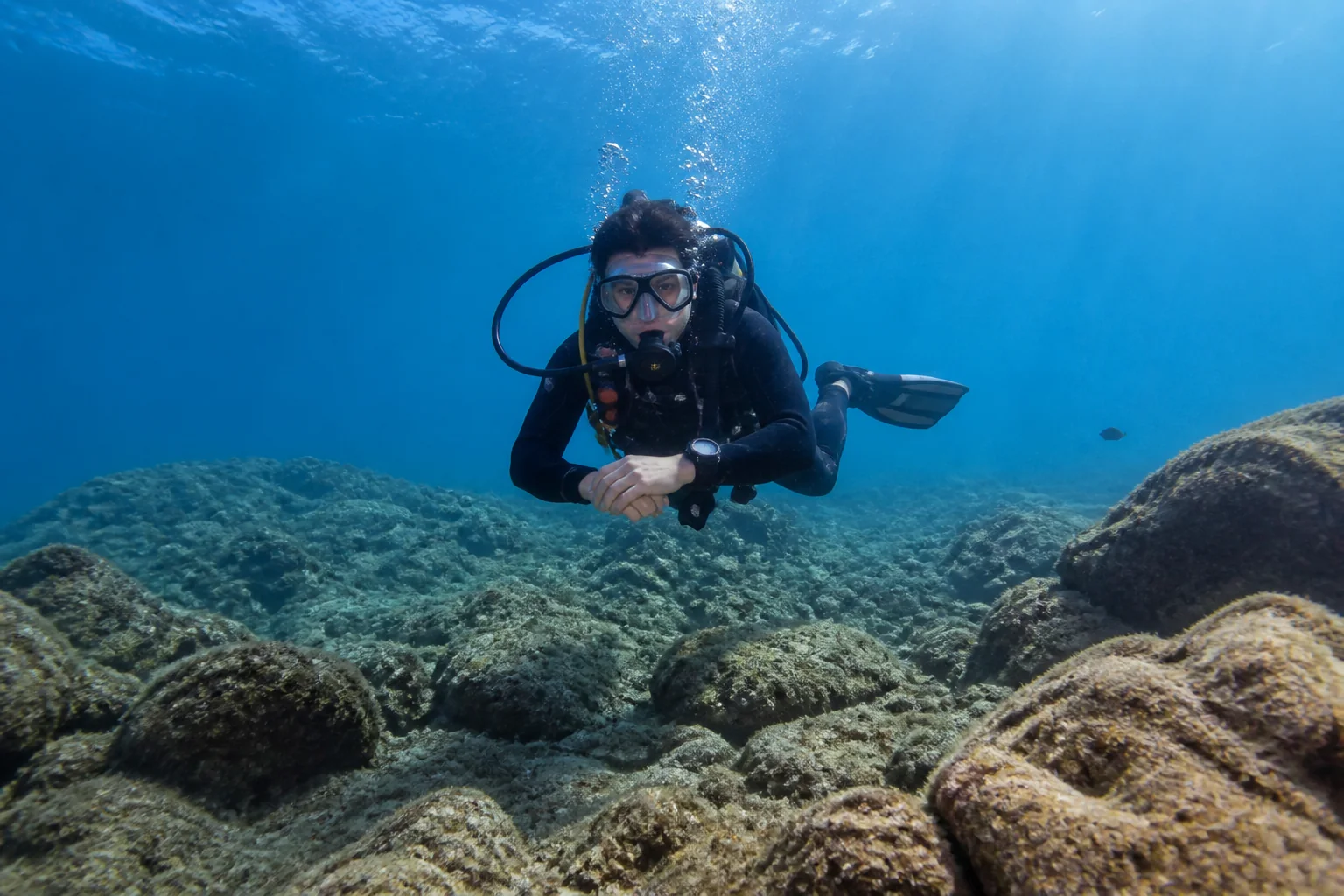
In April 2004, less than a year after learning to dive in Taba Heights, I decided it was time to do my Advanced Open Water course.
The original plan had been to go with my then-partner, but things changed and I ended up going to Tunisia for a week with a friend instead.
One of the things I remember most clearly about arriving was the weather. It was around 20°C and my friend and I were happily walking around in T-shirts and shorts, while many of the locals were wearing jackets and even raincoats. Clearly, our definitions of cold weather were slightly different.
I'd chosen Tunisia partly because I wanted to experience diving somewhere different. I'd learned in the Red Sea, so going to another country and diving in the Mediterranean seemed like a good way to broaden my experience.
Tunisia turned out to be a great country to visit. For diving, at least around Hammamet at that time of year, it wasn't quite so great.
The water was cold, or at least colder than what I'd got used to, the visibility wasn't particularly good and there wasn't a huge amount to see compared with what I'd experienced in the Red Sea. In fairness to Tunisia, I probably wasn't there at the best time to judge its diving.
But I wasn't really there just to look at fish. I wanted to become a better diver.
I enjoyed the Advanced Open Water course because I was learning new skills and becoming more independent underwater. We did deeper diving and spent time learning search techniques, including how to use different underwater search patterns to locate missing objects.
During one of those exercises, we'd already been diving and practising search techniques when the instructor suggested another one. This time, I had to find him.
Basically, underwater hide and seek.
I would stay behind the boat while he entered the water and disappeared from view. After a short time, I would get into the water and try to locate him using the techniques we'd been practising.
Before we started, I checked my air. From memory, I had somewhere around 30/40 bar remaining, which didn't seem like much to me. I told the instructor I was running low.
He said it would be enough.
I wasn't particularly comfortable with it, but he was the instructor and I was the student. He had considerably more diving experience than I did, so I assumed he knew what he was doing and went along with it.
He submerged while I stayed facing away. After a short time, I turned around and tried to work out where he'd gone. The boatman and I could see bubbles breaking the surface some distance away, so I assumed that was where the instructor was and entered the water to follow them.
I then discovered something I hadn't really considered before: bubbles don't necessarily travel straight upwards. With a current they can rise at an angle, so seeing them at the surface doesn't mean the diver is directly underneath.
The visibility was poor and I couldn't find him. I was also still relatively inexperienced and not particularly good at managing my air consumption. The more concerned I became about finding him, the faster I breathed, which wasn't terribly helpful when I hadn't started with much air in the first place.
Eventually I became genuinely nervous. I knew my air was getting very low and I still couldn't see him.
Then, through the murky water, I finally saw the outline of a diver. I descended towards him and almost as soon as I reached him, my air ran out.
I signalled that I was out of air, he gave me his alternate regulator, and we made our way back to the surface together.
What I remember afterwards is being slightly confused by the whole thing.
The instructor didn't make a particularly big issue of what had happened and, at the time, neither did I. I was still a relatively new diver, and I suppose I simply accepted that this was part of the experience.
It was only later, when I thought about it properly, that I realised how unnecessary it had been. I'd told him before entering the water that I had very little air remaining. More importantly, I already knew that I wasn't comfortable doing the exercise with that amount of air.
But when he told me it would be fine, I went anyway.
That incident stayed with me as I became more experienced. Instructors and divemasters obviously know considerably more than a new diver and listening to them is important. But ultimately, you're still the person breathing from your cylinder. If something doesn't feel right, you have to be prepared to say so.
At that stage I hadn't really developed the confidence to do that.
Thankfully, the week wasn't all cold water and questionable diving decisions.
My friend for some reason became really interested in learning horse riding, so I joined her for some riding lessons. I'd never really appreciated how physically uncomfortable sitting on a horse could be. It always looked remarkably easy in films, particularly Westerns.
It isn't.
My backside and back afterwards made it very clear that I'd been using muscles I didn't normally know existed.
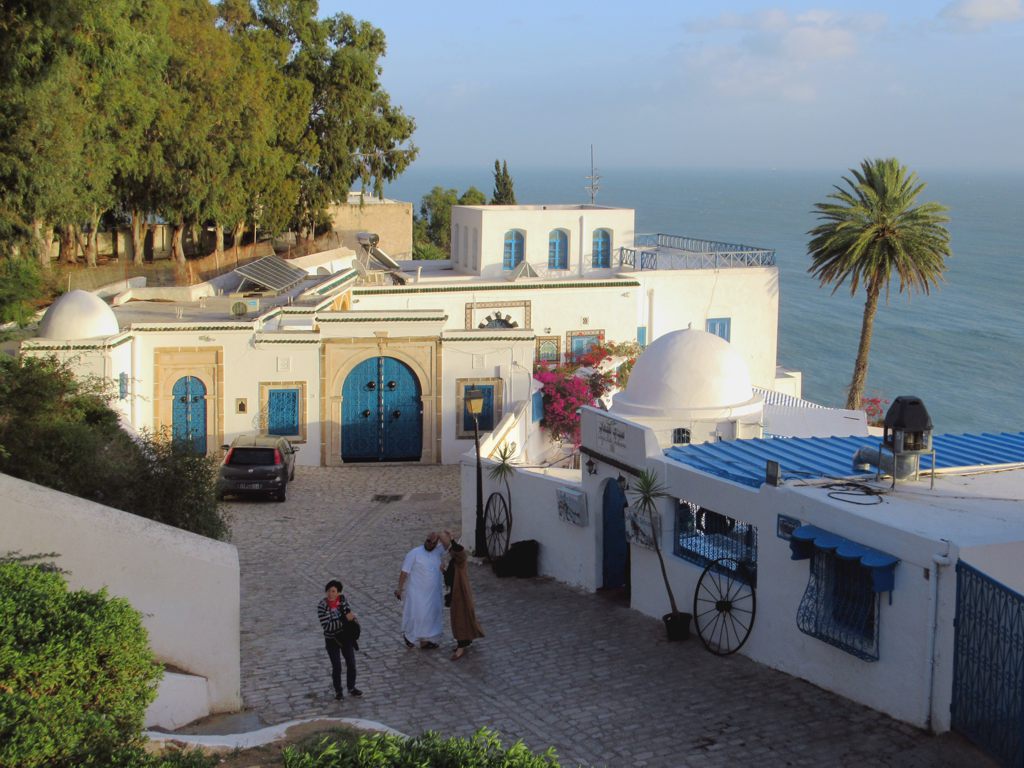
We also went on a desert safari and visited Sidi Bou Saïd, which was probably one of the highlights of the trip. With its white buildings, blue doors and views across the Mediterranean, it was quite different from anywhere else I'd visited.
Tunisia wasn't quite the diving destination I'd imagined when I booked the trip. The water around Hammamet was cold, the visibility wasn't great and the marine life wasn't particularly memorable.
But I completed my Advanced Open Water training, experienced diving in very different conditions from the Red Sea and came home a little more experienced than when I'd arrived.
And I also came home knowing something I hadn't quite understood before: being the least experienced person in the water doesn't mean you have to ignore that little voice telling you something isn't right.
Sometimes you really can just say no.
Interactive dive-site map
Hammamet on Tunisia’s Mediterranean coast
The map separates the resort setting from the wider journey to Sidi Bou Saïd and the interior. Select a labelled pin for further dive information.
Explore the area
Hammamet on Tunisia’s Mediterranean coast
The map separates the resort setting from the wider journey to Sidi Bou Saïd and the interior.
Planning the journey today
When to go and how to get there.
From London, fly to Tunis, Enfidha-Hammamet or Monastir depending on the season and airline schedule, then continue to Hammamet by road. Tunis is roughly an hour away; Enfidha is usually closer.
From continental Europe, Paris, Frankfurt, Rome and other hubs commonly connect with Tunisia. Travellers from farther afield will generally connect through a European hub or Istanbul.
April can feel cool underwater and visibility varies. June to October usually offers warmer sea and air temperatures. Confirm whether a local centre is operating and what exposure protection it recommends before travelling specifically to dive.